|
Home
Office Notes
Mission Statement
Client Services
Information
What is
Mitigation?
Court or legal
mitigation is the process of presenting evidence to reduce the severity
of penalties, sentences, or damages in legal cases. It focuses on
contextual factors like personal history, mental health, or remorse to
argue for leniency. It applies to both criminal sentencing (lowering
prison time) and civil cases (reducing monetary damages).
Criminal Sentencing
Presenting
evidence of a defendant's abusive background, rehabilitation efforts, or
mental illness to argue for a lower sentence rather than the maximum.
Mitigation Packet
Submitting a
formal packet of character reference letters, proof of counseling, and
employment history to a prosecutor to encourage a plea deal or reduced
charges.
Civil Damages
(Duty to
Mitigate) In a contract dispute, a landlord must try to find a new
tenant (mitigate) rather than just suing for the full year's rent after
a tenant moves out early.
Defamation Cases
A defendant
publishing a correction or apology to mitigate (reduce) the damages owed
to the plaintiff.
Difference Between Defense and Mitigation
Courtroom Advice:
Proper Behavior
Courtroom Rules
and Procedures
Mitigate:
Guide to Legal Definitions and Use
Courtroom Attire
Just Mercy by
Bryan Stevenson
Home
Office Notes
Mission Statement
Client Services
Information
Courtroom Protocol
It is important
for defendants in court to make a positive impression and to be viewed
favorably by the judge, prosecutors, and jury. It is beneficial,
therefore, for defendants to be aware of the proper protocol and
etiquette.
Courtroom etiquette for defendants requires showing respect for
the legal process through appropriate attire, punctuality, and calm
behavior. Key rules include addressing the judge as "Your Honor,"
standing when the judge enters, and remaining quiet.
Before Entering the
Courtroom
-Arrive early: Arrive at least 30 minutes before your
scheduled time.
-Dress professionally: Wear conservative, clean
clothing, such as a suit, business-casual attire, slacks
and collared shirts (avoid clothing that is revealing,
sporty, or flashy).
-Take off
hats and sunglasses.
-Remove
forbidden items (weapons and knives).
-Turn off devices: Silences cell phones, pagers, and
smartwatches.
Inside the Courtroom
-Behavior: Stand when the judge enters or leaves.
-Do not bring food or beverages,
do not chew gum.
-Addressing the court: Refer to the judge as "Your
Honor."
-Non-verbal behavior: Avoid displaying anger or
disapproval while listening to opposing testimony.
-Respect staff: Treat court staff, opposing counsel, and
security with courtesy.
-Children: Children are generally not permitted in the
courtroom, so arrange for childcare.
During Proceedings
-Stand to speak: Stand up when speaking directly to the
judge.
-Do not interrupt: Never interrupt the judge, attorneys,
or witnesses.
-Answer directly: If asked a question, provide a
concise, brief answer.
-Follow directions: If the judge gives a direct order,
follow it immediately.
Behavior
Tips
-Always remain
calm, polite, and respectful.
-Do not use
informal or slang language.
-Never lie, argue, use sarcasm, or make threats.
-Do not raise
your voice or act angry or aggressive.
-Never make
excuses or blame others.
-Avoid
uncertain language that weakens your credibility (I think... I guess...
I believe...)
-Avoid
non-verbal disrespect (sighing, making faces, eye-rolling, acting
bored).
Related Organizations
Legal Defense Fund (LDF)
American Civil Liberties Union (ACLU)
National Women's Law Center (NWLC)
Southern Poverty Law Center (SPLC)
National Association for the Advancement of
Colored People (NAACP)
League of United Lain American Citizens (LULAC)
International
Association of Addictions and Offender Counselors (IAAOC)
Lambda Legal
Healthy Sexual Solutions
Home
Office Notes
Mission Statement
Client Services
Information
Malone, Barragan & Associates
Mitigation Solutions Group
PO Box 430174, Birmingham, Alabama 35243
205-356-5083 | TheMitigationSolutions@gmail.com

|
|
Nothing can make
injustice just but mercy.
-Robert Frost
Mitigation Explained
Key Aspects
-Sentencing Criteria: Mitigation occurs in the
sentencing stage of the trial.
-Not a Defense: Mitigation does not prove innocence; it
acknowledges liability but seeks a better outcome. It
does not excuse the crime, but presents factors that
justify compassion and lower penalties.
-Role of Defense: The defense team gathers personal
histories, medical records, and expert evaluations to
humanize the defendant.
-Civil Obligation: In civil cases, plaintiffs are often
required to take reasonable steps to prevent the damages
from getting worse.
Mitigation in a
Court of Law
Courtroom
Etiquette Tips
Presenting the Whole Person in
Court
Courtroom Decorum
and Etiquette
Just Mercy by Bryan Stevenson

Evidence and Factors
In court, mitigation refers to evidence or factors presented by the
defense to reduce the severity of a sentence, penalty, or damages,
aiming for a more lenient outcome. It highlights circumstances that
decrease a defendant’s culpability (like remorse, trauma, or mental
health) without excusing the crime, or in civil cases, steps taken to
limit losses.
Common examples of mitigating evidence include
evidence of a difficult upbringing, mental health issues, sincere
remorse, or cooperation with law enforcement.
Effective mitigation can include character reference letters, proof of
counseling or rehabilitation, or evidence of community involvement,
volunteer work, and other positive contributions. These materials show
the court your remorse, responsibility, and willingness to change — all
of which can lead to reduced penalties or alternative sentencing.
Purpose
To convince the judge or jury that a lower
sentence or reduced damages are appropriate based on the context of the
person and the crime.
Mitigating Factors/Circumstances
Examples include a minor role in the crime, lack
of a criminal record, severe emotional distress, addiction, or actions
taken under duress.
Humanization
Defense attorneys use mitigating evidence (such as
personal histories, therapy records, or family testimonials) to show the
defendant is more than their charges.
Contrast to Aggravation
While
prosecutors present aggravating factors (reasons to increase
punishment), the defense presents mitigating factors (reasons to
decrease punishment).
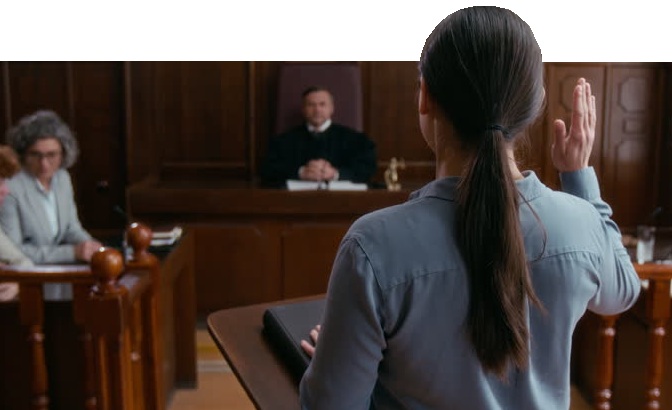
Mitigation in a
Court of Law
Courtroom
Etiquette Tips
Presenting the Whole Person in
Court
Courtroom Decorum
and Etiquette
Just Mercy by
Bryan Stevenson
Common Mitigation Terms
-Leniency: Asking for a less severe punishment.
-Extenuation: Showing circumstances that make the offense less
reprehensible.
-Diminution of damages: Lowering the amount of money a party is entitled
to.
-Rehabilitation evidence: Demonstrating efforts to improve oneself to
avoid future offenses.
-Character evidence: Evidence concerning the defendant's moral standing.
Common Mitigation Factors
Genuine
Remorse: Evidence that the defendant feels sincere regret for their
actions, often demonstrated through apologies or taking responsibility.
No Prior Record: A clean record or lack of previous criminal
history, suggesting the offense is out of character.
Minor Role/Participation: Evidence showing the defendant played a
minor, passive, or secondary role in the commission of the crime.
Mental/Emotional State: Evidence of mental illness, developmental
disabilities, extreme stress, or trauma (e.g., childhood abuse) that
influenced behavior.
Provocation: Situations where the victim provoked the defendant,
reducing the defendant's culpability.
Cooperation: Assisting law enforcement, such as pleading guilty
or providing information, which may show willingness to reform.
Good Character/Rehabilitation Potential: Evidence of a
defendant's good deeds, volunteer work, employment history, military
service, or potential to reform.
Duress: The defendant acted under illegal coercion or pressure
from another person.
|

